
What Happens After You File Chapter 7 Bankruptcy? Step-by-Step Process Explained
Learn what happens after filing Chapter 7 bankruptcy, including the automatic stay, trustee review, 341 Meeting of Creditors, debt discharge, and the path toward a financial fresh start.t description.
Robert Durham
5/19/20263 min read
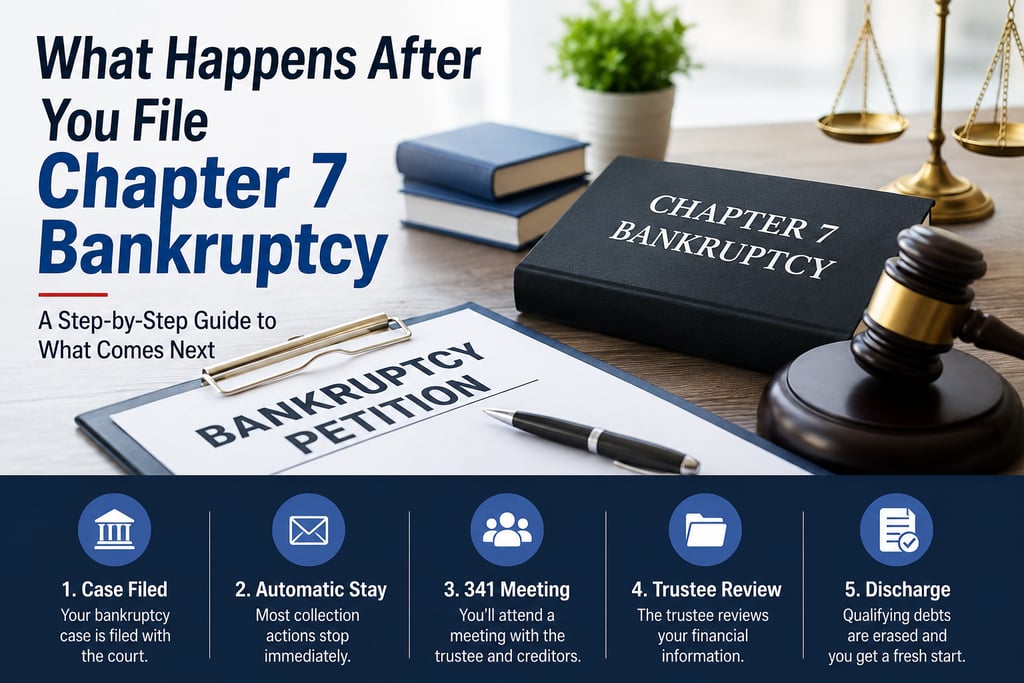
What Happens After You File Chapter 7 Bankruptcy
Filing Chapter 7 bankruptcy can feel overwhelming at first, especially for individuals facing collection calls, wage garnishment, lawsuits, or financial stress. Many people wonder what happens next once the bankruptcy paperwork is officially filed with the court.
Understanding the general Chapter 7 bankruptcy timeline can help reduce fear and uncertainty. While every bankruptcy case is different, most Chapter 7 cases follow a similar process from filing to discharge.
This article explains what typically happens after filing Chapter 7 bankruptcy and what individuals can generally expect during the process.
What Happens Immediately After Filing Chapter 7 Bankruptcy?
Once a Chapter 7 bankruptcy case is filed with the bankruptcy court, something called the automatic stay usually goes into effect immediately.
The automatic stay is a legal protection that may temporarily stop many collection activities, including:
• Creditor collection calls
• Wage garnishments
• Lawsuits
• Bank levies
• Repossession actions
• Foreclosure proceedings (in some situations)
For many individuals, this is one of the biggest sources of immediate relief after filing bankruptcy.
A Bankruptcy Trustee Is Assigned
After the bankruptcy case is filed, the court appoints a bankruptcy trustee to review the case.
The trustee’s role generally includes:
• Reviewing bankruptcy paperwork
• Verifying financial information
• Examining assets and debts
• Conducting the 341 Meeting of Creditors
The trustee does not represent the person filing bankruptcy or the creditors. Instead, the trustee helps administer the bankruptcy process according to federal bankruptcy law.
Creditors Are Notified
After filing, creditors are formally notified that a bankruptcy case has been opened.
This notice typically includes:
• The bankruptcy case number
• Court information
• The scheduled 341 Meeting date
• Information regarding the automatic stay
In many cases, collection activity slows or stops once creditors receive notice of the bankruptcy filing.
The 341 Meeting of Creditors
One of the next major steps is the 341 Meeting of Creditors, sometimes called the “creditors meeting.”
Despite the name, many creditors do not actually attend.
During this meeting:
• The trustee verifies identity
• Questions may be asked about financial documents
• The bankruptcy paperwork is reviewed under oath
Common questions may involve:
• Income
• Property ownership
• Debts
• Tax returns
• Bank accounts
In many Chapter 7 cases, the meeting is relatively brief and may last only a few minutes.
Required Financial Management Course
Before a Chapter 7 discharge can be entered, individuals are generally required to complete a financial management course from an approved provider.
This course is different from the pre-filing credit counseling course required before bankruptcy filing.
After completion, a certificate is usually filed with the bankruptcy court.
What Happens to Debt During Chapter 7?
Chapter 7 bankruptcy is designed to eliminate many types of unsecured debt, including:
• Credit card debt
• Medical bills
• Personal loans
• Certain judgments
However, some debts may not be dischargeable, depending on the circumstances. Examples can include:
• Certain taxes
• Child support
• Alimony
• Some student loans
Whether a debt can be discharged depends on the specific situation and bankruptcy law.
How Long Does Chapter 7 Bankruptcy Take?
Most Chapter 7 bankruptcy cases typically take around 3 to 6 months from filing to discharge.
The timeline may vary depending on factors such as:
• Complexity of the case
• Asset issues
• Court schedules
• Documentation requirements
For many individuals, the discharge marks the official completion of the bankruptcy process.
What Is a Bankruptcy Discharge?
A bankruptcy discharge is the court order that eliminates qualifying debts included in the bankruptcy case.
Once a discharge is entered:
• Many unsecured debts are legally eliminated
• Creditors are generally prohibited from attempting collection on discharged debts
For many people, this represents the beginning of a financial fresh start.
Life After Chapter 7 Bankruptcy
Many individuals are surprised to learn that rebuilding financially often begins shortly after bankruptcy.
After discharge, people commonly focus on:
• Budgeting
• Rebuilding credit responsibly
• Saving money
• Reducing financial stress
Although bankruptcy may remain on a credit report for several years, many individuals begin receiving credit offers again relatively quickly after discharge.
Learning About the Bankruptcy Process
Fear and uncertainty often prevent people from learning about their legal options. Understanding the general Chapter 7 process can help individuals make more informed financial decisions.
If you would like to learn more about how Chapter 7 bankruptcy generally works, visit:
Bankruptcy 911 Emergency provides educational information designed to explain the Chapter 7 process in clear, step-by-step language.
Important Disclaimer
This article is provided for educational purposes only and does not constitute legal advice. Bankruptcy laws vary by jurisdiction and individual circumstances. Always consult with a qualified bankruptcy attorney regarding your specific situation.
Newsletter
Copyright © 2026
Robert Vance Durham Jr.
All rights reserved.
No part of this book may be reproduced, distributed, or transmitted in any form or by any means—electronic or mechanical—without prior written permission of the author, except for brief quotations used in reviews.