
After Chapter 7 Discharge, Can They Take Your Tax Refund or Inheritance?
Can a trustee take your tax refund or inheritance after Chapter 7 discharge? Learn the time limits, rules, and what assets may still be at risk.
Robert Durham
4/12/20262 min read

My post content
After Chapter 7 Discharge, Can They Take Your Tax Refund or Inheritance?
After receiving a Chapter 7 discharge, many people believe their financial situation is completely behind them.
But an important question remains:
👉 Can your tax refund or inheritance still be taken after your bankruptcy discharge?
The answer depends on timing, asset status, and when you became entitled to the money.
Understanding this can help you avoid unexpected financial surprises.
What Happens After Chapter 7 Discharge?
A Chapter 7 discharge means:
• your eligible debts are eliminated
• creditors can no longer collect
• you receive a financial fresh start
However, your case may still be technically open even after discharge.
👉 This is where confusion happens.
The Key Concept: “Bankruptcy Estate”
When you file Chapter 7, everything you own (or are entitled to receive) becomes part of your bankruptcy estate.
This includes:
• property
• money
• certain future assets
The trustee controls this estate while your case is open.
Can They Take Your Tax Refund After Discharge?
It Depends on When the Refund Was Earned
A tax refund is usually considered:
👉 an asset based on income earned BEFORE filing
Example:
If you file bankruptcy in June:
The portion of your tax refund earned from January–June may belong to the bankruptcy estate
Even if you receive the refund AFTER discharge
Key Rule:
👉 If the refund is tied to income earned before filing, the trustee may still claim it.
👉 If it’s from income earned after filing, it is usually yours to keep.
What About Inheritance After Chapter 7?
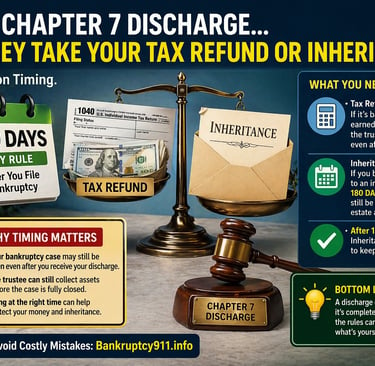
Inheritance follows a very specific rule known as the 180-day rule.
The 180-Day Rule
If you become entitled to an inheritance:
👉 Within 180 days (about 6 months) after filing bankruptcy
It may still become part of your bankruptcy estate.
Example:
You file bankruptcy
3 months later, a relative passes away
You are named in the will
👉 That inheritance can still be claimed by the trustee — even after discharge.
After 180 Days
If you receive or become entitled to inheritance:
👉 More than 180 days after filing
It is typically yours and not part of the bankruptcy estate.
Why This Confuses So Many People
Most people assume:
👉 “Once I get my discharge, everything is over.”
But in reality:
• discharge ≠ case fully closed
• trustees can still administer assets
• timing rules still apply
When Does the Trustee Lose Control?
The trustee’s ability to take assets generally ends when:
👉 the case is fully closed
👉 all assets have been administered
👉 no additional claims are pending
This may occur weeks or months after discharge.
How to Protect Your Tax Refund or Inheritance
Proper planning before filing bankruptcy can help protect assets.
Key strategies include:
• understanding timing before filing
• using exemptions properly
• avoiding filing right before receiving large funds
Why Timing Is Critical in Bankruptcy
Many costly mistakes happen because people file at the wrong time.
Examples:
• filing right before a large tax refund
• not considering potential inheritance
• misunderstanding asset rules
These mistakes can result in losing money that could have been protected.
Learn How to Avoid Costly Bankruptcy Mistakes
If you want a clear breakdown of how to prepare before filing and avoid losing assets, visit:
👉 https://www.bankruptcy911.info
You’ll learn:
• how to time your filing correctly
• what assets may be at risk
• how Chapter 7 really works
Final Thoughts
Even after a Chapter 7 discharge, certain assets like tax refunds and inheritances may still be at risk — depending on timing.
Understanding the 180-day inheritance rule and how tax refunds are calculated can help you protect your finances.
The key takeaway:
👉 Discharge does not always mean the process is completely over.
Newsletter
Copyright © 2026
Robert Vance Durham Jr.
All rights reserved.
No part of this book may be reproduced, distributed, or transmitted in any form or by any means—electronic or mechanical—without prior written permission of the author, except for brief quotations used in reviews.