

Bankruptcy 911 Emergency
Clear Step-By-Step Guidance for
Chapter 7 Bankruptcy and
Your Financial Fresh Start
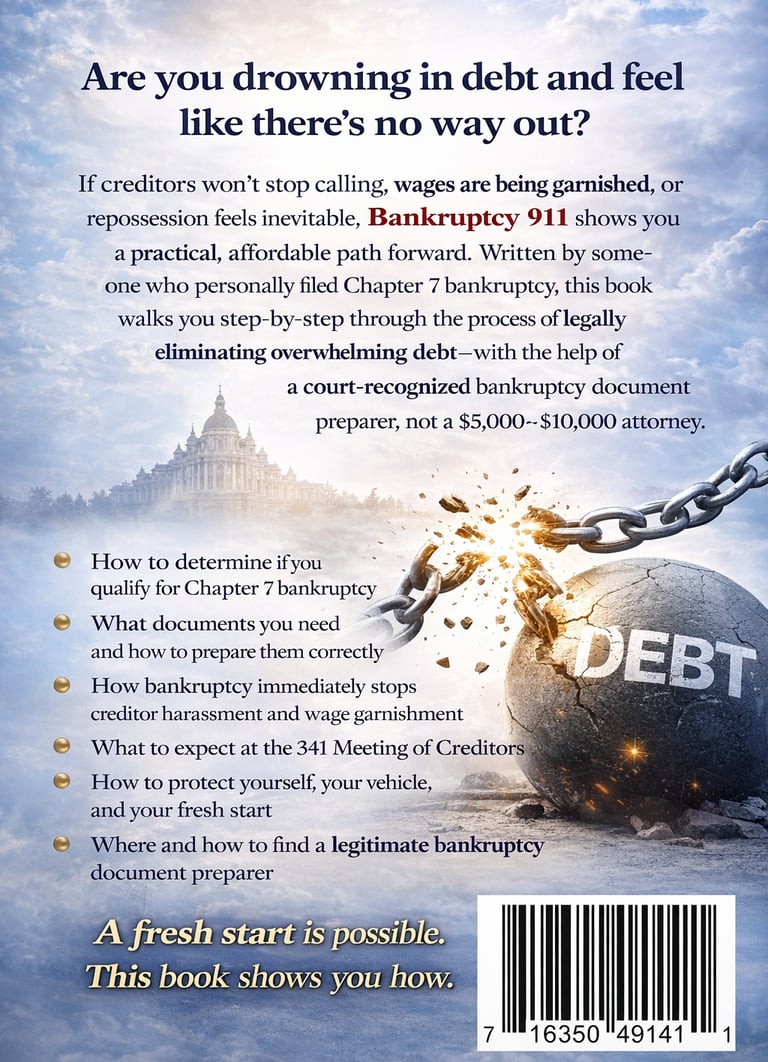
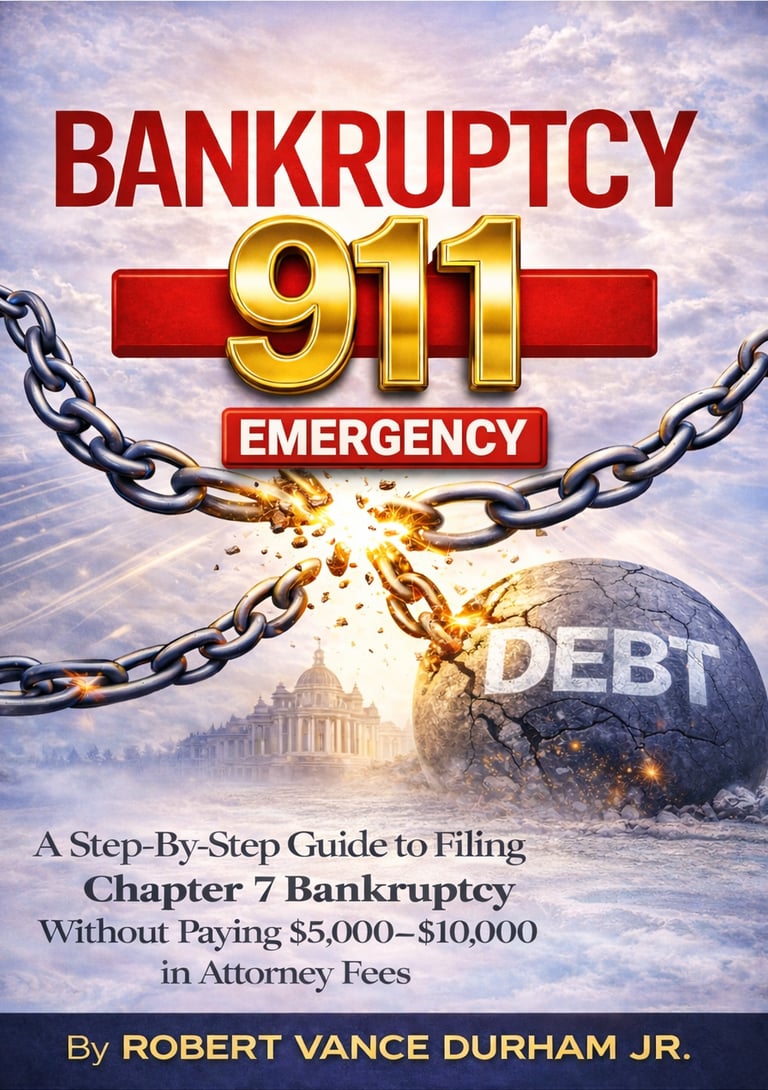
A straightforward, step-by-step guide to understanding Chapter 7 bankruptcy, preparing correctly, and moving toward a fresh financial start.
What is Bankruptcy 911 Emergency?
Bankruptcy 911 Emergency is a practical educational guide designed to help individuals understand the Chapter 7 process without confusing legal language or unnecessary costs.
Written in plain English, this guide walks you through:
what to expect
how to prepare
common mistakes to avoid
steps toward financial recovery.
Inside the guide you will learn:
✔ How Chapter 7 bankruptcy works
✔ What documents you need
✔ What happens at the 341 meeting
✔ How bankruptcy stops collection activity
✔ Vehicle decisions after filing
✔ The Bankruptcy 911 Emergency Preparation Checklist.
✔ Educational Resource
✔ Step-by-Step Structure
✔ Plain Language Guidance
✔ Immediate Digital Download.
Understand your options, prepare correctly, and take the first step toward financial relief with clear educational guidance without paying
Thousands of Dollars.
Feeling Overwhelmed by Debt?
If you are dealing with:
✔ creditor calls
✔ wage garnishment
✔ financial stress
✔ uncertainty about bankruptcy
You are not alone. Bankruptcy 911 Emergency was created to help you understand the process clearly and confidently.
👉 Download the Guide Now
Secure checkout • Instant digital download • Educational resource
Fair refund review available for technical issues. See refund policy.
Chapter 7 Bankruptcy FAQ (Top 21 Questions)
⭐1. What is Chapter 7 bankruptcy?
Chapter 7 bankruptcy is a legal process designed to help individuals eliminate certain unsecured debts, such as credit cards and medical bills, and obtain a financial fresh start.
⭐ 2. Who qualifies for Chapter 7 bankruptcy?
Eligibility depends on factors such as income level, expenses, and the “means test,” which evaluates whether your income falls within guidelines for Chapter 7 relief.
⭐ 3. What debts can be discharged in Chapter 7?
Common dischargeable debts include:
Credit card balances
Medical bills
Personal loans
Certain judgments.
Some debts may not be dischargeable, such as certain taxes or student loans (with limited exceptions).
⭐ 4. What happens to my property?
Many individuals keep most or all of their property due to exemption laws that protect essential assets like household goods, clothing, and sometimes vehicles or homes.
⭐ 5. Will I lose my home or car?
Not necessarily. Many people retain their property depending on equity, loan status, and applicable exemptions.
⭐ 6. How long does Chapter 7 bankruptcy take?
Most Chapter 7 cases typically last about 3–6 months from filing to discharge, although timelines vary.
⭐ 7. What is the automatic stay?
The automatic stay is a legal protection that stops most collection actions, lawsuits, wage garnishments, and creditor contact after filing.
⭐ 8. What is the 341 meeting?
The 341 meeting (meeting of creditors) is a short hearing where you answer questions under oath about your financial information.
⭐ 9. Do creditors attend the 341 meeting?
Often they do not attend, but they have the right to appear and ask questions.
⭐ 10. How does Chapter 7 affect my credit score?
Filing bankruptcy may impact your credit initially, but many people begin rebuilding credit shortly after discharge.
⭐ 11. Can I file Chapter 7 without an attorney?
Some individuals choose to file with the assistance of qualified bankruptcy professionals or document preparers. However, legal guidance may be appropriate depending on your situation.
⭐ 12. What documents are required to file?
Typical documents include:
income records
tax returns
bank statements
debt information
proof of identity.
⭐ 13. Will filing stop wage garnishment?
In many cases, yes — the automatic stay may halt wage garnishments once the case is filed.
⭐ 14. Can I keep using my credit cards after filing?
Generally, existing credit accounts may be closed during bankruptcy proceedings.
⭐ 15. What happens to co-signers?
Co-signers may still be responsible for debts depending on the circumstances.
⭐ 16. How often can you file Chapter 7?
Typically, individuals must wait eight years between Chapter 7 discharges.
⭐ 17. Do I need credit counseling?
Yes. Pre-filing credit counseling from an approved agency is usually required.
⭐ 18. Is Chapter 7 bankruptcy public record?
Yes, bankruptcy filings are part of the public record, though most people do not actively search these records.
⭐ 19. Can bankruptcy stop foreclosure?
It may temporarily delay foreclosure through the automatic stay, depending on the situation.
⭐ 20. Is this book legal advice?
No. Bankruptcy 911 Emergency provides educational information only and does not replace consultation with a qualified legal professional.
⭐ 21. What's the difference between filing Chapter 7 VS. Chapter 13 Bankruptcy?
Chapter 7, oftern referred to as “Liquidation” Bankruptcy
Chapter 7 is designed to wipe out unsecured debt quickly.
It’s often called a “fresh start” bankruptcy.
Most cases last about 3–6 months.
Chapter 13, oftern referred to as “Wage Earner’s Plan”Chapter 13 is a court-supervised repayment plan lasting:
3 to 5 years
Instead of wiping out debt immediately, you repay a portion over time.
Why not just Google everything?”
scattered info
legal jargon
outdated articles
VS Structured step-by-step guide.