
How Chapter 7 Bankruptcy Works: A Step-By-Step Guide
Learn how Chapter 7 bankruptcy works step by step. Understand the full Chapter 7 process, from filing to discharge, and what to expect at every stage.
Robert Durham
3/23/20263 min read
My post content
If you’re overwhelmed by debt and considering bankruptcy, one of the most important things to understand is how Chapter 7 bankruptcy actually works.
Chapter 7 is one of the most common forms of bankruptcy because it can eliminate many types of unsecured debt in a relatively short time.
This guide breaks down the Chapter 7 process step by step, so you know exactly what to expect before filing.
What Is Chapter 7 Bankruptcy?
Chapter 7 bankruptcy is often called “liquidation bankruptcy.”
It is designed to:
• eliminate unsecured debt
• provide a financial fresh start
• stop most collection actions
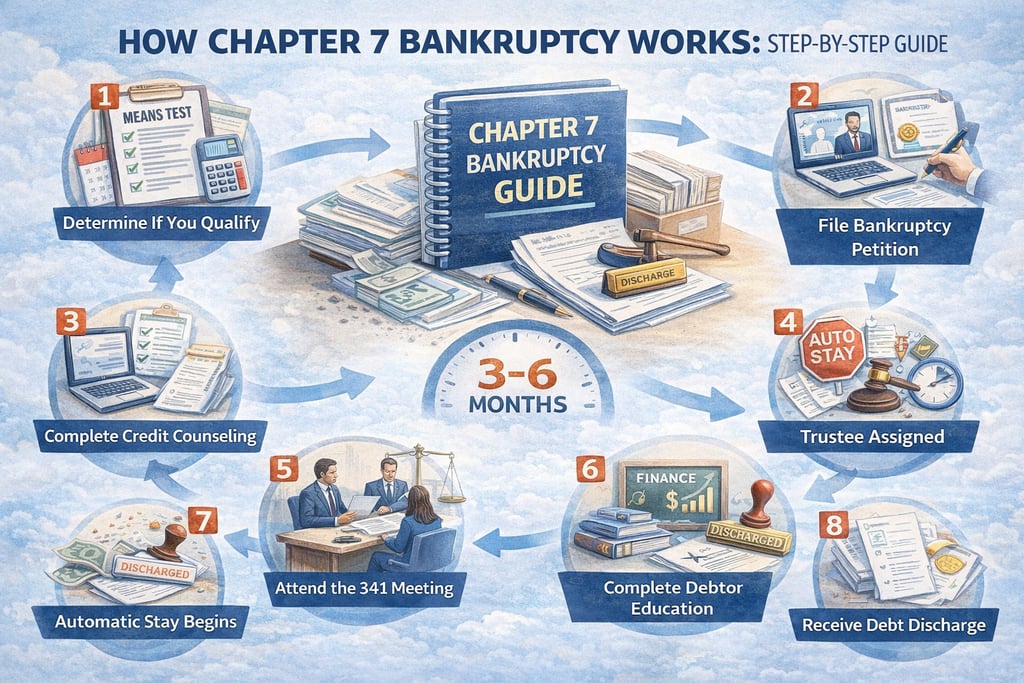
Most Chapter 7 cases are completed within 3 to 6 months.
Step 1: Determine If You Qualify (Means Test)
Before filing, you must determine if you qualify for Chapter 7.
This is done through the means test, which compares:
• your income
• your household size
• your state’s median income
If your income is below the median, you typically qualify.
If it is higher, additional calculations determine eligibility.
Step 2: Complete Credit Counseling
Before filing bankruptcy, you must complete a credit counseling course from an approved provider.
This course:
• usually takes about 60–90 minutes
• can be completed online or by phone
• is required before filing your case
You will receive a certificate that must be included with your bankruptcy filing.
Step 3: Prepare and File Your Bankruptcy Petition
The next step is preparing your bankruptcy paperwork.
This includes detailed information about:
• your income
• your expenses
• your debts
• your assets
• recent financial transactions
Once completed, your petition is filed with the bankruptcy court.
Step 4: Automatic Stay Goes Into Effect
Immediately after filing, something called the automatic stay goes into effect.
This is one of the most powerful benefits of bankruptcy.
It stops:
• creditor calls
• lawsuits
• wage garnishments
• collection actions
This protection begins as soon as your case is filed.
Step 5: Trustee Is Assigned to Your Case
After filing, the court assigns a bankruptcy trustee.
The trustee’s role is to:
• review your paperwork
• verify your financial information
• identify any non-exempt assets
In many Chapter 7 cases, there are no assets to liquidate.
Step 6: Attend the 341 Meeting (Meeting of Creditors)
About 20–40 days after filing, you will attend a 341 meeting of creditors.
Despite the name, creditors rarely attend.
During this meeting:
• the trustee asks basic questions
• you confirm your financial information
• the process is typically brief (5–10 minutes)
Step 7: Complete Debtor Education Course
After your 341 meeting, you must complete a second course called debtor education.
This course focuses on:
• financial management
• budgeting
• responsible credit use
Completion is required before receiving a discharge.
Step 8: Debt Discharge
If everything is completed properly, the court will issue a discharge order.
This typically happens about 60–90 days after the 341 meeting.
Once your debts are discharged:
• you are no longer legally required to pay them
• creditors cannot attempt to collect
How Long Does Chapter 7 Bankruptcy Take?
Most Chapter 7 cases follow this general timeline:
• Filing to 341 meeting: 20–40 days
• 341 meeting to discharge: ~60–90 days
• Total time: 3 to 6 months
What Debts Are Eliminated in Chapter 7?
Chapter 7 can typically eliminate:
• credit card debt
• medical bills
• personal loans
• payday loans
Some debts, such as child support, certain taxes, and most student loans, are usually not discharged.
Why Understanding the Chapter 7 Process Matters
Many people make costly mistakes before filing bankruptcy because they don’t fully understand how the process works.
Proper preparation can help you:
• avoid delays
• protect your assets
• maximize your financial outcome
Learn More About Filing Chapter 7 Bankruptcy
If you want a clear, step-by-step breakdown of how to prepare before filing, visit:
👉 https://www.bankruptcy911.info
You’ll learn:
• how to prepare for filing
• common mistakes to avoid
• what to expect during the process
Final Thoughts
Chapter 7 bankruptcy can provide powerful relief from overwhelming debt, but understanding the process beforehand is essential.
By learning how Chapter 7 bankruptcy works step by step, you can approach the process with confidence and avoid unnecessary mistakes.
Newsletter
Copyright © 2026
Robert Vance Durham Jr.
All rights reserved.
No part of this book may be reproduced, distributed, or transmitted in any form or by any means—electronic or mechanical—without prior written permission of the author, except for brief quotations used in reviews.